He Knew Better
Lindsey Graham understood Donald Trump before most Republicans admitted what they were seeing. His failure was not misjudgment. It was surrender.
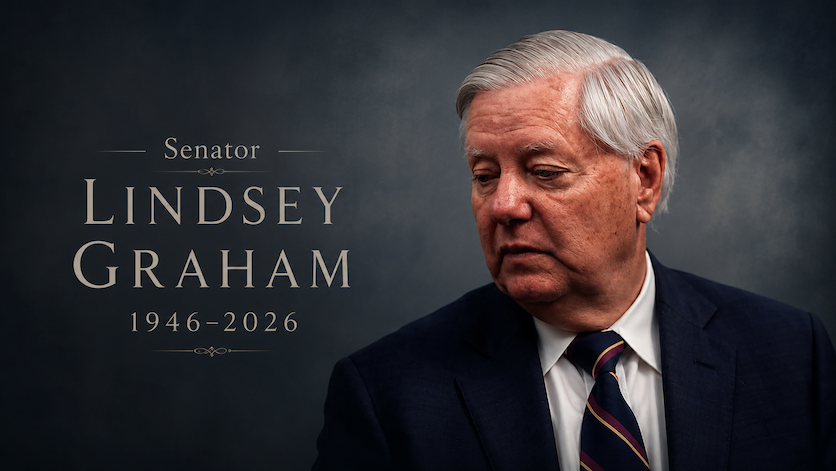
Lindsey Graham is dead, and the easiest jokes are already waiting in the wings.
There will be innuendo about his sexuality. There will be old rumors dressed up as wit. None of it is necessary. None of it tells us anything useful about the public life he chose to lead.
It also loses the intellectual argument.
The moment the discussion becomes a joke about whether Graham was gay, his documented political transformation disappears behind gossip. His private identity, whatever it may have been, is not the case against him. His public record is.
His failure was not that he misunderstood Donald Trump. His failure was that he understood him correctly, warned us clearly, and then chose submission anyway.The argument that matters
In 2015, Graham described Trump as a race baiting, xenophobic, religious bigot. He said Trump did not represent his party and did not represent the values defended by Americans in uniform.
That was not a minor disagreement over taxes, procedure, or foreign policy. It was a moral judgment about character.
Graham saw the man clearly. He understood the appeal Trump was making. He recognized the danger of grievance, prejudice, and personal rule. He said so in language that left little room for misunderstanding.
Then Trump won.
Graham did not present new evidence. He did not explain that his earlier judgment had been mistaken. He did not tell the country that Trump had changed. Instead, Graham changed.
A true leader can adjust his opinions. A true leader can admit he was wrong. New evidence matters. Experience matters. Failed policies should be abandoned. Stubbornness is not integrity merely because it refuses to move.
But there is a difference between revising an opinion and reversing a moral standard.
A principled change comes with an explanation. The leader tells us what he learned, what he misunderstood, or what facts altered his judgment. He accepts the embarrassment of correction because truth matters more than protecting his ego.
A moral reversal without that accounting suggests something else. It suggests that the facts stayed the same while the incentives changed.
Changing an opinion can reveal wisdom. Changing a moral standard to remain close to power reveals weakness.
Graham spent years beside John McCain. He benefited from that friendship, politically and personally. To many Americans, some of McCain's independence seemed to rub off on him.
That comparison now feels too generous.
McCain was hardly flawless. No serious person needs to turn him into a secular saint. But he cultivated an identity built around the willingness to absorb political damage, anger his own party, and occasionally stand alone.
Graham appeared to inherit that tradition. What he ultimately demonstrated was how quickly the appearance of independence can collapse when relevance is offered in exchange for obedience.
After McCain was gone, Graham moved closer to the very man who had mocked his friend, insulted his service, and embodied the political character Graham had once condemned.
Principles do not count only when they earn applause. They count when keeping them costs access, influence, and a seat near the throne.
There is a flattering defense of Graham. Perhaps he believed proximity gave him influence. Perhaps he thought he could guide Trump on foreign policy, judges, national security, or the machinery of government.
That defense cannot be dismissed entirely. Politics requires relationships with unpleasant people. Governing is not a seminar in personal purity.
But access becomes corruption when the price of maintaining it is public submission. Influence that cannot survive an honest disagreement is not influence. It is permission granted by a stronger personality.
Graham may have gained phone calls, golf outings, television appearances, and a place inside Trump's orbit. The cost was that the man who once spoke with clarity became increasingly difficult to distinguish from the courtiers surrounding the president.
He remained capable of disagreement, particularly on foreign policy. That makes the transformation more complicated, but not less disappointing. He was not mindless. He was not powerless. He made choices.
Masculinity is often marketed as dominance. The loudest man wins. The strongest man bends the room around himself. Everyone else proves loyalty by falling into formation.
That is not leadership. It is hierarchy without character.
The harder masculine virtue is moral independence. It is the ability to remain yourself when a powerful man rewards compliance and punishes dissent. It is knowing when loyalty has become servitude. It is accepting exile from the inner circle rather than pretending that humiliation is strategy.
Graham once looked prepared for that test. He had the language. He had the experience. He had the example of a close friend who understood that reputation and office are not the same thing as honor.
Then the test arrived, and Graham folded.
He did not merely change his mind about a politician. He abandoned a moral judgment without showing that the man, the conduct, or the danger had changed.
There is no need to speculate about Graham's sexuality. There is no need to mock his voice, his mannerisms, his bachelorhood, or anything else that turns political criticism into a schoolyard taunt.
Those jokes do not sharpen the case. They dull it.
They also repeat an old and ugly idea, that being gay is inherently humiliating and that accusing a man of homosexuality is an effective way to strip him of masculinity. That is not progressive criticism. It is recycled contempt wearing a different campaign button.
Graham's public choices provide more than enough material. We should have the discipline to use it.
He Knew Better
Lindsey Graham served his country for decades. He had real experience, real intelligence, and genuine command of foreign policy. His career should not be reduced to a single insult or one easy verdict.
That is precisely why his surrender matters.
This was not an ignorant man swept along by forces he could not comprehend. This was a seasoned senator who identified Trump's character with remarkable clarity. He understood the warning signs. He explained them to the public. He knew what loyalty to constitutional government and military service was supposed to mean.
Then he chose relevance.
Death does not require us to lie. It does require enough restraint to judge a public man by what he actually did, rather than by rumors about who he may privately have been.
Lindsey Graham deserved better than cheap jokes. The country deserved better than the man he chose to become.
A true leader can admit he was wrong. A weak one changes his moral standard when power makes the old standard inconvenient.