Tomorrow is Election Day. If you farm, work a shift, run a small shop, or drive forty minutes to the nearest clinic, ask yourself one plain question: did the people who promised you a better deal deliver it?
Rural voters sent a clear message in 2024: fix the cost of living. Two years later, here is what has actually arrived.
The farm economy is flashing red
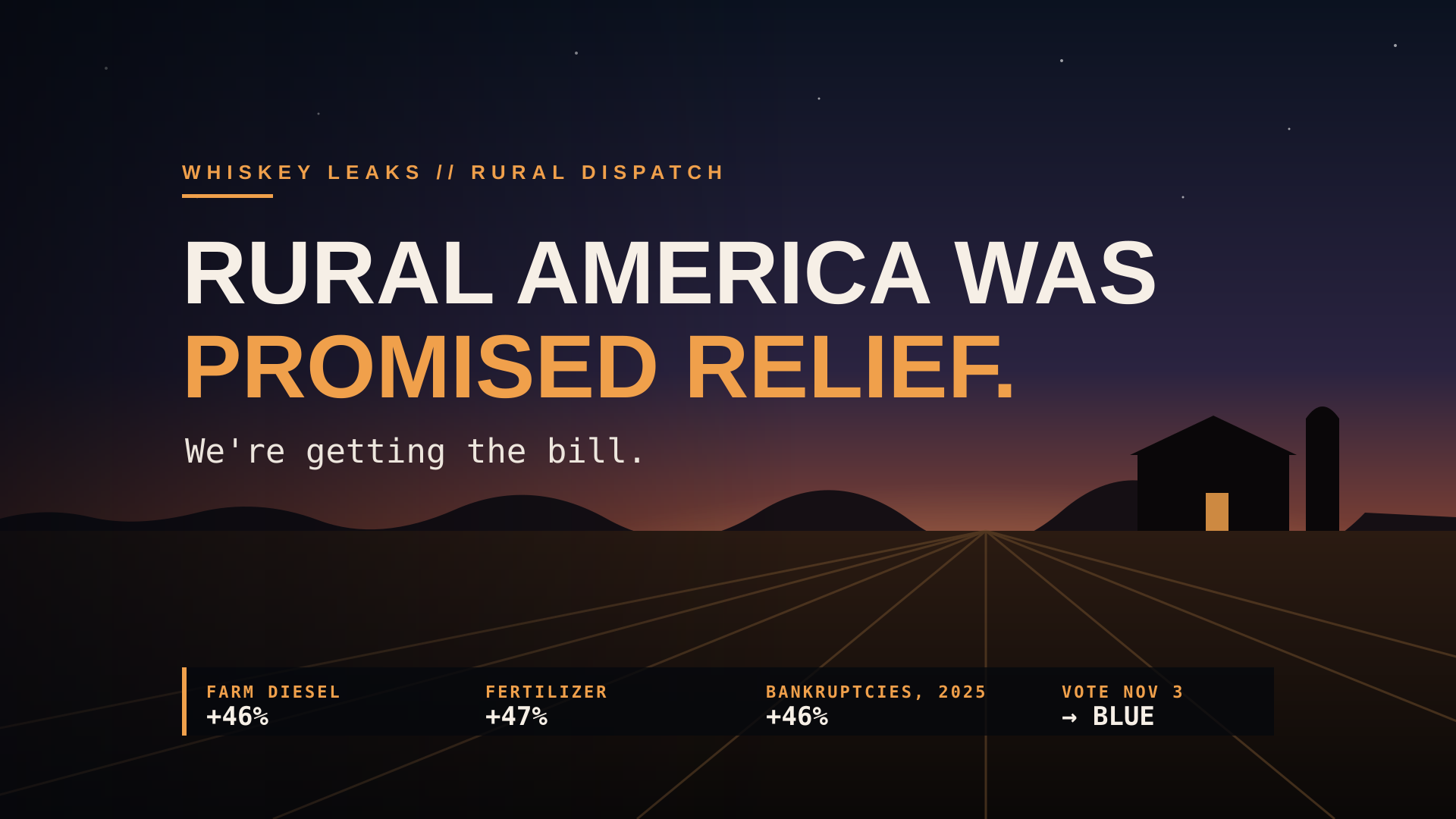
Farm bankruptcies rose 46% in 2025, and USDA projects record farm debt of $624.7 billion in 2026. Chapter 12 farm filings are up nearly 19% over the same stretch of 2025. Market income for farmers has dropped roughly 34% since its 2022 peak, and $47.4 billion of this year's net cash farm income comes from federal payments. That is a bailout, not a business plan.
Tariffs closed export markets and raised the cost of steel, aluminum and equipment, and ag analysts are warning that farmers should expect higher input prices in 2027. Meanwhile, immigration raids in southwest Kansas left ranchers short-staffed during harvest.
The Iran war sent the bill to the pump and the fertilizer dealer
The war began on February 28, and rural America has been paying for it ever since. A Farm Bureau economist found farm diesel up 46% and fertilizer up as much as 47%. This fall, diesel hit record prices again, and tractor maker AGCO cut its sales outlook as high costs and weak crop prices dragged down farmer demand.
Rural households feel it everywhere, because they drive farther and have fewer alternatives. The Center for American Progress, a liberal think tank, estimates rural households are paying at least $26 more per week at the pump than before the war. The pain is uneven, too: only 19% of Southern farmers had bought fertilizer ahead of the spike, versus 67% in the Midwest. And while costs soared, grain prices fell below prewar levels.
The administration has now announced $8 billion in fuel aid, as it courts farm voters ahead of the midterms. Help is welcome. But it is a bandage on a wound the war itself opened.
The health care cuts are scheduled for after you vote
The enhanced ACA premium subsidies expired at the start of this year, and sign-ups in rural counties have dropped about 12%. In December, the Senate rejected a Democratic plan to extend the subsidies for three more years.
Then there is the 2025 budget law. The Congressional Budget Office estimates it cuts federal Medicaid spending by $911 billion over ten years. Beginning in 2027, states must verify Medicaid enrollees' work status every six months. SNAP participation has already fallen by roughly 5 million people since the law passed, and the state cost-sharing that starts in 2027 will hit rural states especially hard. In places with slow internet and long drives to the county office, paperwork is how people lose coverage.
Since 2010, more than 200 rural hospitals have closed or ended inpatient care, and 417 are currently vulnerable to closure. The law does include a $50 billion rural health fund, and that is real money. But it was written to soften a much larger cut, and Arizona got about two-thirds of what its governor sought.
Notice the calendar. The Medicaid work requirements don't begin until after November 2026, and critics call that timing deliberate. You are being asked to vote before the bill comes due.
What Democrats are offering instead
- Restore health coverage. Bring back the expired premium credits. Democrats have also introduced a federal public option for the marketplace. New Mexico replaced the lost federal subsidies with state money and saw record enrollment.
- Protect rural hospitals. The New Democrat rural agenda calls for stabilizing rural hospitals and undoing the Medicaid cuts, and there is a bipartisan bill for $500 million in emergency support to struggling rural hospitals.
- Pass a farm bill that helps farmers. Senate Democrats have indicated that reversing or delaying the SNAP cost-sharing is necessary to secure their votes. The New Dem agenda would also restore funding for programs that let schools and food banks buy from local farmers.
- Lower input costs. Push back on tariffs that raise what farmers pay, and back right-to-repair so a farmer isn't stuck waiting on a dealer to fix a combine. Several states have bipartisan versions moving already.
- Invest in the basics. Rural broadband, housing and workforce training that keep young people in town.
Why tomorrow matters
The 2027 start dates are not set in stone. House Democratic leader Hakeem Jeffries has said some of these cuts could be rolled back if Democrats win back the House. A divided Congress forces negotiation. A rubber stamp does not.
Rural people have never asked for a handout. You asked for fair prices, a hospital close to home, and a government that answers when costs spike. If that has not been delivered, tomorrow is your chance to say so. Find your polling place and hours on your state election office's website, and bring a neighbor.
Sources
- CBS News: In tight Kansas Senate race, struggling rural voters are split
- Talk Business & Politics: We still have a farm crisis
- AgNavigator: 3 trends shaping the ag economy heading into 2027
- Bloomberg via BusinessWorld: US farm firms signal more murky times
- Reuters via Investing.com: Rising fuel prices hit US farms
- Center for American Progress: Iran war and rural costs
- Morrison County Record: Farm Bureau fuel and fertilizer analysis
- Daily Yonder via WOUB: rural ACA enrollment declines
- AP via NewsChannel 9: Health subsidies expire
- PracticeLink: One Big Beautiful Bill healthcare overview
- CBPP: Trump and Congressional Republican agenda has harmed rural communities
- CBPP: September 22, 2026 analysis (PDF)
- National Rural Health Association: Senate Farm Bill letter
- Center for Rural Health, University of Arizona: news
- Talking Points Memo: Many Big Beautiful losses won't be felt until after midterms
- Becker's Payer: ACA open enrollment wraps
- Fed Budget Guy: ACA news
- New Democrat Coalition: Rural Revitalization Agenda
- New Democrat Coalition: rural strategy ahead of midterms
- Rep. Josh Riley: rural hospital emergency support
- RCRC: Senate Ag Committee releases Farm Bill text
- The Garden Island: states consider right to repair for farm equipment